

How to make reverse osmosis water at home?
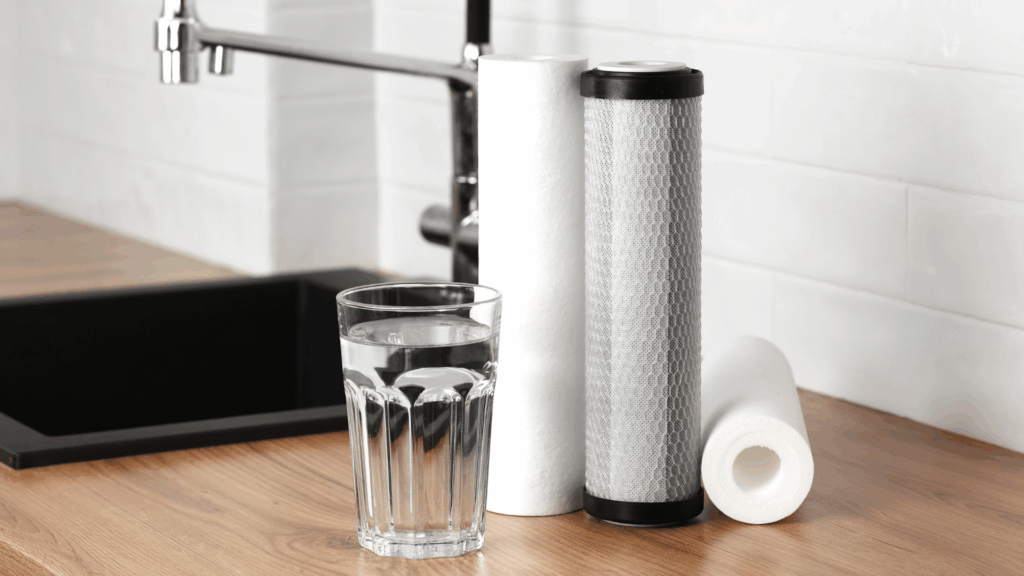
Even this morning, you let the water run for a few seconds before filling your glass. A deeply ingrained habit, almost a reflex… and for good reason. Between the chlorine taste and doubts about what your water really contains, trust is no longer quite there. The solution? Take matters into your own hands and produce your own healthy resource at home. This guide walks you through it step by step and explains how to make reverse osmosis water at home, with the right equipment and the criteria you should not overlook.
Reverse osmosis water: what is it?
Before discovering how to make reverse osmosis water, you need to understand what it actually is.
The principle of reverse osmosis water is simple: your household water passes through an ultra-fine membrane that lets only H2O molecules through. Everything else—chlorine, nitrates, heavy metals, pesticides, bacteria—remains blocked on the other side. This gives you water that is free of almost all contaminants.
💧 From this, you can already imagine all the benefits of reverse osmosis water for your body.
Can you really make reverse osmosis water yourself?
Let us be clear from the outset: if you are wondering how to make reverse osmosis water in a homemade way with activated charcoal, it is simply impossible.
Reverse osmosis requires specific equipment, including a suitable membrane.
Several systems are now available to individuals. You can install them at home without being a professional plumber, but the real question is which equipment best suits your needs.
What solutions are available to produce reverse osmosis water at home?
Two main families of equipment are available. Your choice will depend on your setup and your consumption habits.
Under-sink reverse osmosis systems
This is the “invisible” solution. The system connects directly to your water supply under the kitchen sink. It runs continuously and offers a high filtration capacity.
It is the ideal solution if you have a large family or if you consume a lot of water every day. However, for installation, allow a few hours of DIY work, or call a plumber if you prefer to delegate.
Reverse osmosis water dispensers
Do you live in an apartment or do you not want to touch your plumbing? In that case, reverse osmosis water dispensers are for you. Compact, they simply sit on a countertop, with no permanent connection.
In terms of use, it is child’s play: you fill the tank with tap water, and the dispenser does the rest.
What criteria should you use to choose the right reverse osmosis system?
Knowing how to make reverse osmosis water is a good start. But above all, you need to choose the right equipment based on very specific criteria (daily use, maintenance, budget, etc.).
Filtration quality and number of stages
A good system generally includes between 3 and 5 filtration stages. The more there are, the more thoroughly your water is purified.
💧 At Struct’Water, we recommend a minimum of 5 stages to remove up to 99% of contaminants.
Capacity and production flow rate
Ask yourself: how many litres of water do you consume per day? A compact dispenser produces around 10 to 15 litres per hour, which is more than enough for typical household use.
Ease of maintenance and the cost of consumables
This is the trap many buyers fall into. A system that is inexpensive to purchase can become a financial sinkhole if replacement filters cost a fortune. Check their price and availability before you decide.
Filters are generally replaced every 6 to 12 months depending on the model.
And after filtration? The importance of “water dynamisation”
Now you know how to obtain ultra-pure reverse osmosis water, but is that enough? Not really, because reverse osmosis has a small drawback: as it passes through the membrane, your water loses some of its natural properties. It is then said to be “de-structured.”
Some systems include a dynamisation stage to restore the water’s vitality. This dynamised water is better assimilated by your body and regains characteristics close to those of spring water. If you are looking for truly biocompatible water, this criterion can make all the difference.
How to make reverse osmosis water every day: key takeaways
Here is what you need to keep in mind:
- Reverse osmosis water is filtered by reverse osmosis, a process that removes up to 99% of impurities;
- It is impossible to produce it without suitable equipment (no homemade method);
- Two solutions exist: an under-sink reverse osmosis system or a reverse osmosis dispenser;
- Key criteria for choosing your device: number of filtration stages, capacity, ease of maintenance;
- Dynamisation helps restore your water’s natural properties.
👉 Would you like to produce pure, dynamised water at home? Discover our reverse osmosis system designed to provide you with quality water every day.
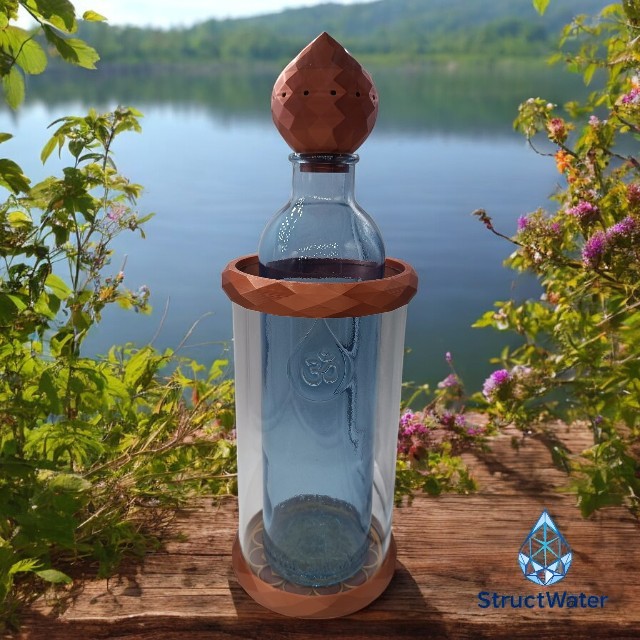
Struct'Water water structurer
- 5-year warranty
- 50-year lifespan
- Water ready to drink in 15 minutes
Interested in the Struct’Water concept?
Do not hesitate any longer and order your water structurer now to quickly benefit from the advantages of structured water. Secure payment and fast delivery to your home or a pickup point.
You can contact us for any questions or necessary information; our team is here for you.


